
At the end of my suffering
there was a door
—Louise Glück, The Wild Iris
In our call for submissions, we asked for poems concerned with space, place and structure. We invited poems that consider architecture as their subject and method, and sought pieces that engage with the physical and imagined realms of architecture, the spaces we inhabit, traverse, or dream into existence.
In response, we received hundreds of poems addressing different forms of grief, loss, and deep fear and uncertainty. Perhaps it was inevitable: as in Glück’s The Wild Iris, our deepest, most difficult feelings often seek physical manifestation. Poetry can hold contradictions; it provides space for what is present and lost at the same time. Memories, dreams, and our understanding of the past as it takes place in the present, can all be held within the changing structure of poems.
As poets ourselves, we have learned that one of the greatest challenges during the writing process is to create a structure that is not only strong but flexible enough to carry an emotional storm without being completely broken by it.
We found the reading process exciting: alongside work that expressed intense feelings, we received poems of formal experimentation, concrete poetry, and pieces focused on particular buildings and structures. When we asked Laura Scott to write a poem on the theme of architecture, we didn’t expect to receive a piece entitled The House’s Dream of Itself was at its Grandest Downstairs, in which a building evokes its own contemplations. When we approached architect Rebecca Wober to see if she would write about her recent visit to the King’s College Archive in Cambridge, we didn’t know that her piece would reveal new and unexpected links between the architecture of King’s College Chapel, and the letters of Sylvia Plath.
Our interest in architecture was sparked by an exciting collaboration. In Spring 2025, we were invited to work with architecture scholars at Christ’s College, University of Cambridge, as part of a poetry and architecture project. We worked with the scholars, delivering poetry workshops at the conference and later throughout the rest of the academic year, encouraging participants to study the sonnet form and experiment with creating sonnets. We chose this task carefully: both of us have worked extensively with the sonnet in our recent books, as stand-alone pieces and within longer sequences. We believed that the form would particularly appeal to architecture scholars since it contains two unequal compartments separated by an inevitable shift, change, or schism – the Volta.
As the project evolved, we aimed to challenge the participants even further, asking them not only to compose a sonnet each but to link them into a collaborative sequence: a Crown of Sonnets, in which each sonnet begins with the previous sonnet’s final line. We were inspired by the scholars’ openness and eagerness to work together. While some had prior experience with poetry, others were new to it. We hope you enjoy reading their collaborative piece.
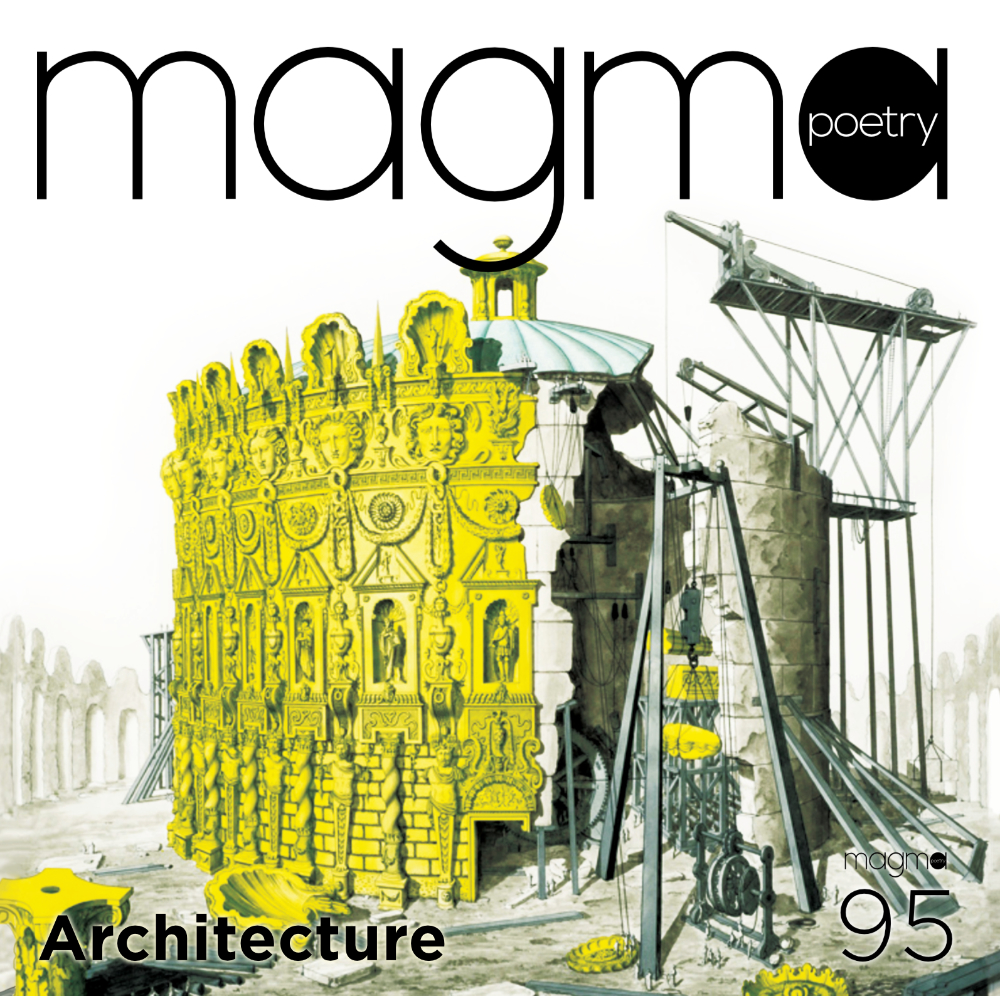
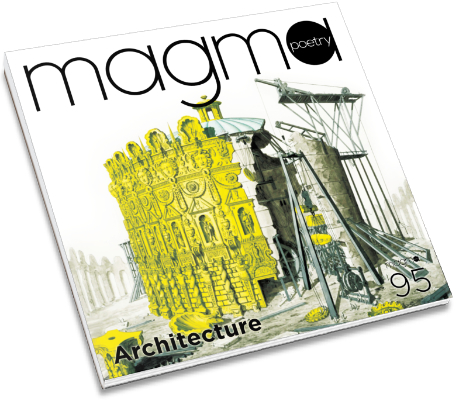
We are delighted to share with our readers the vastly different torrents and currents we have chosen to include in this issue. We are especially excited to feature Pablo Bronstein’s artworks as the covers for this issue, and we chose two distinct images to give readers different ways to engage with our content.
We hope that each reader will find poems they wish to dwell in – spaces to pause, wander through, and perhaps return to. As you explore this issue, we invite you to discover its many rooms: poems that contain storms and stillness, strength and fracture, invention and memory.
Leo Boix and Stav Poleg, editors, Magma 95: Architecture
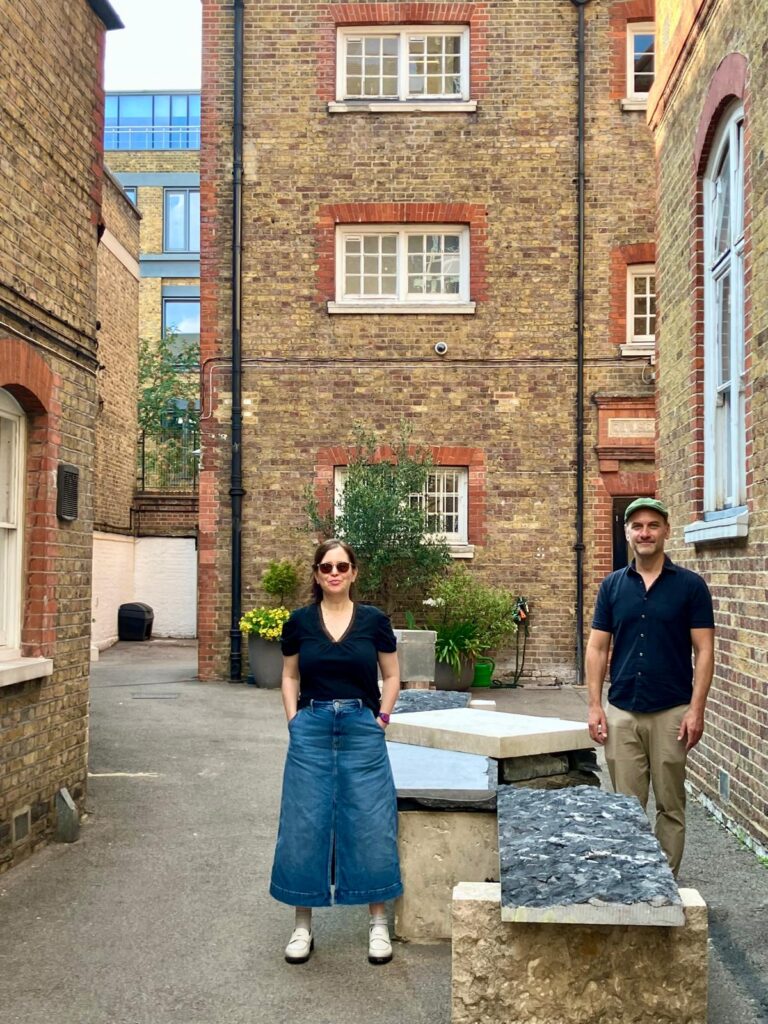
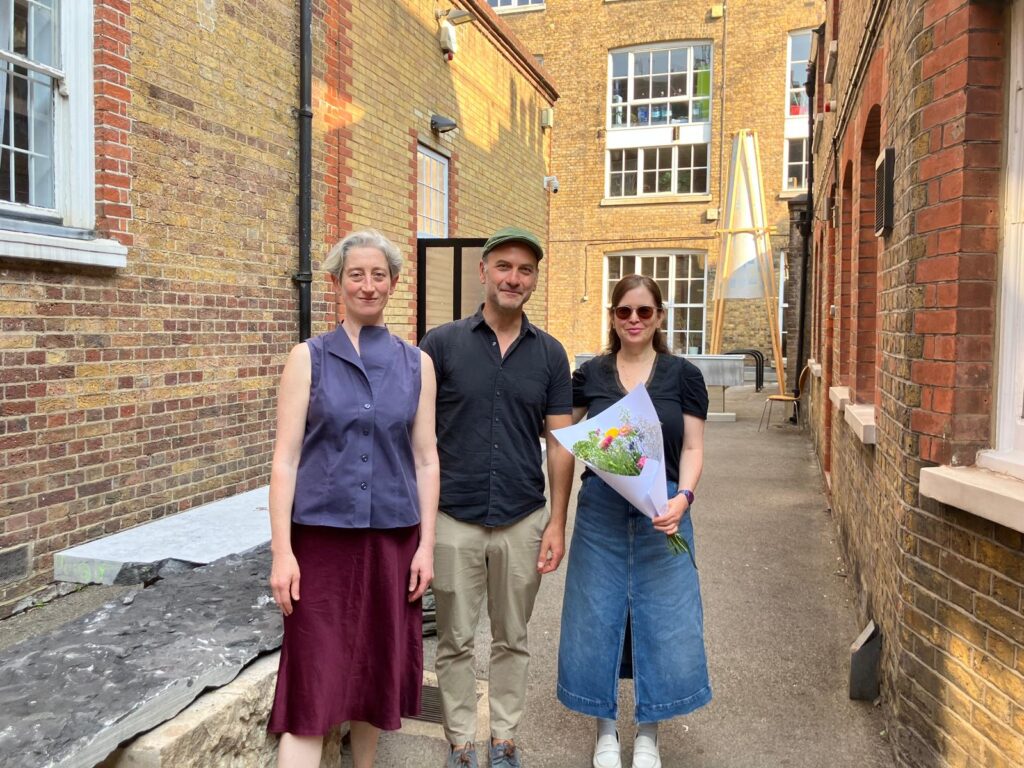
Images: Magma 95 co-editors Leo Boix and Stav Poleg with architect Rebecca Wober
at the London launch event, held at the Zaha Hadid Foundation
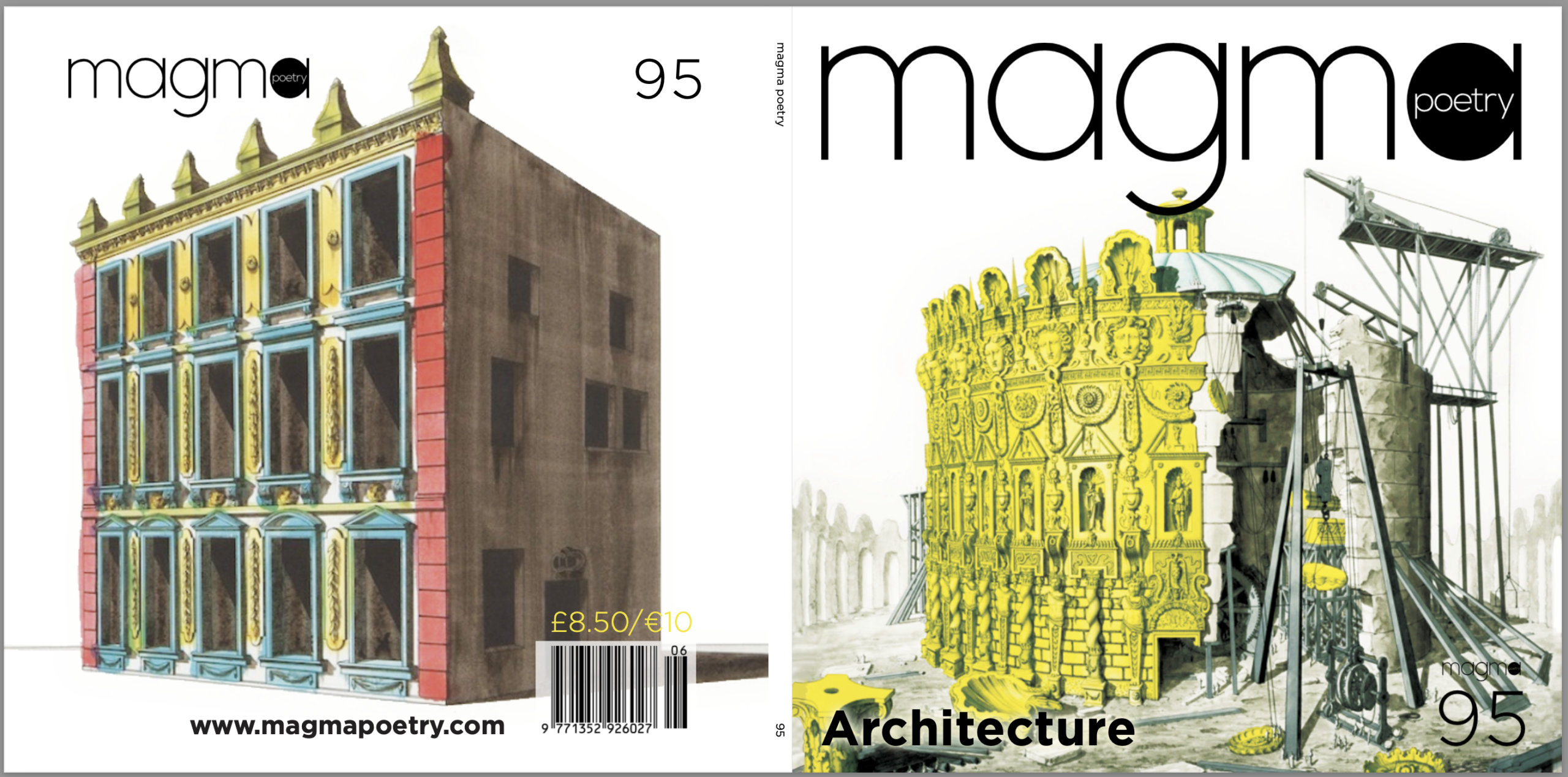
Cover images by Pablo Bronstein, Golden Temple, 2017 (front) and Bright New Façade, 2011 (back).
Images courtesy of Herald St Gallery
*
Buy this issue for £8.50 in UK (including P&P) »Buy Now
 Supported by Arts Council England